



ADC Linkers
Antibody-drug conjugates linkers
Antibody-drug conjugates (ADCs) consist of a desirable monoclonal antibody, an active cytotoxic drug and an appropriate linker. An appropriate linker between the antibody and the cytotoxic drug provides a specific bridge, and thus helps the antibody to selectively deliver the cytotoxic drug to tumor cells and accurately releases the cytotoxic drug at tumor sites. In addition to conjugation, the linkers maintain ADCs’ stability during the preparation and storage stages of the ADCs and during the systemic circulation period.
The ADCs currently undergoing clinical evaluation contain linkers are mostly classified into two categories: cleavable and noncleavable. Cleavable linkers rely on processes inside the cell to liberate the toxin, such as reduction in the cytoplasm, exposure to acidic conditions in the lysosome, or cleavage by specific proteases within the cell. Noncleavable linkers require proteolytic degradation of the antibody portion of the ADC for release of the cytotoxic molecule, which will retain the linker and the amino acid by which it was attached to the antibody.
The selection of linker is target dependent, based on the knowledge of the internalization and degradation of the antibody-target antigen complex, and a preclinical in vitro and in vivo activity comparison of conjugates. Moreover, the choice of a linker is also influenced by which cytotoxin is used, as each molecule has different chemical constraints, and frequently the drug structure lends itself to a specific linker.
ADC Linkers Isoform Specific Products
-
ADC Linkers
(530)
View all products
-
Cleavable Linker
(445)
View all products
-
Non-cleavable Linker
(205)
View all products
-
Acid Cleavable Linker
(7)
View all products
-
Disulfide Cleavable Linker
(126)
View all products
-
Protease Cleavable Linker
(83)
View all products
-
Glycosidase Cleavable Linker
(6)
View all products
-
Phosphatase Cleavable Linker
(1)
View all products
All Product Categories
-
ADC Linkers Related Products (1202)
Related Products (1202)

-
ADC Linkers Isoform Comparison
-
Fmoc-Gly3-Val-Cit-PAB
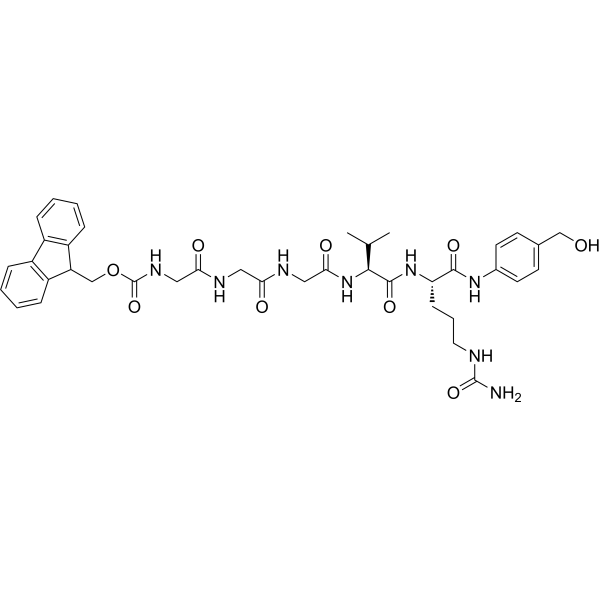 0 ImagesCat. No.: HY-136106CAS No.: 2647914-09-6Fmoc-Gly3-Val-Cit-PAB is a cleavable ADC linker used in the synthesis of antibody-drug conjugates (ADCs).
-
Fmoc-Val-D-Cit-PAB
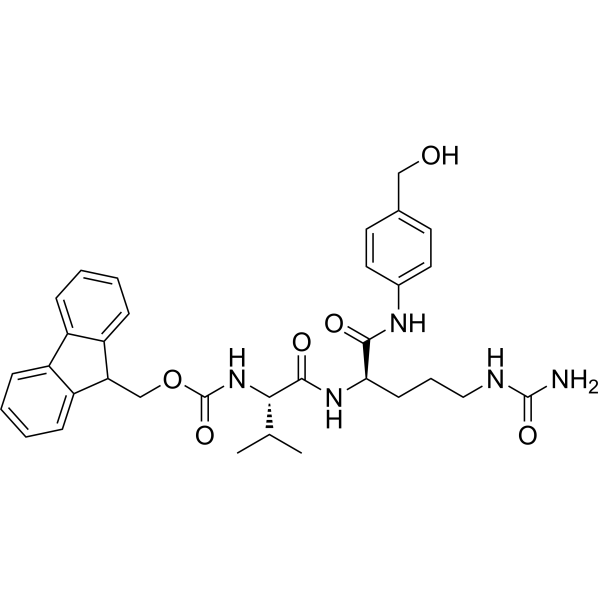 0 ImagesCat. No.: HY-19318ACAS No.: 1350456-67-5Fmoc-D-Val-Cit-PAB is a cleavable linker for antibody-agent-conjugation (ADC).
-
Mal-PEG4-Val-Cit-PAB-OH
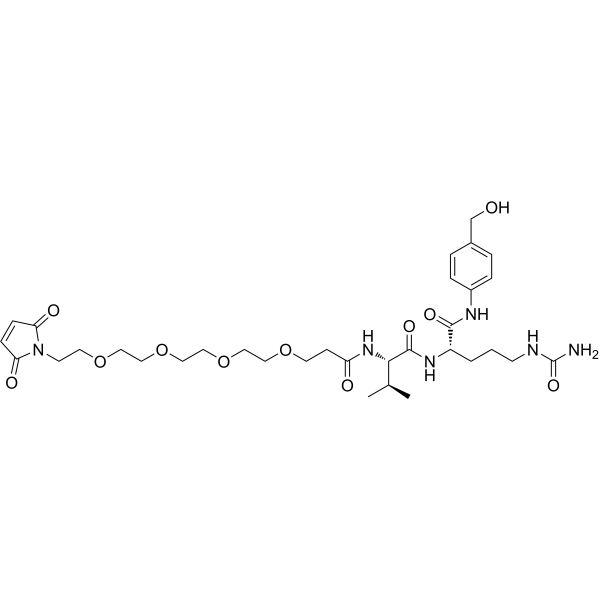 0 ImagesCat. No.: HY-140143CAS No.: 2055041-39-7Mal-PEG4-Val-Cit-PAB-OH is a cleavable 4 unit PEG ADC linker used in the synthesis of antibody-drug conjugates (ADCs).
-
KY371
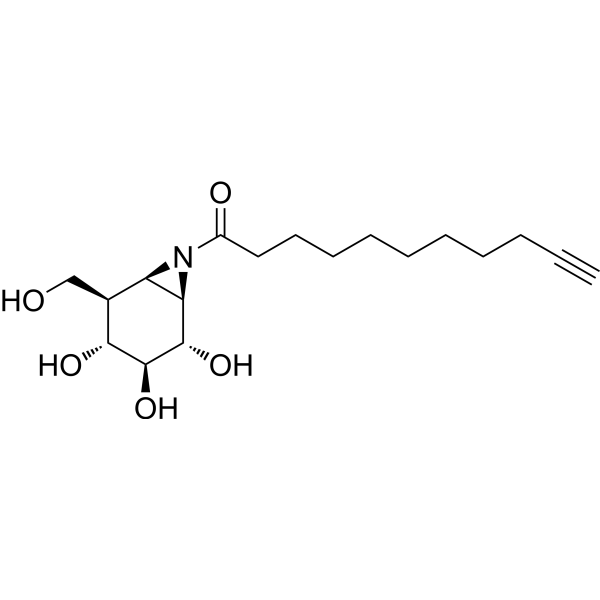 0 ImagesCat. No.: HY-147084KY371 is a click chemistry reagent containing an alkyne group. KY371 is a broad-range glycosidase inhibitor. KY371 can combine with proteomic analysis of targeted protein to study glycosidases.
-
Fmoc-Gly-Gly-allyl propionate
 0 ImagesCat. No.: HY-400191ACAS No.: 2766214-15-5Fmoc-Gly-Gly-allyl propionate is a cleavable linker that can be used to synthesize Antibody-Drug Conjugates (ADCs).
-
Sulfo-LC-SPDP
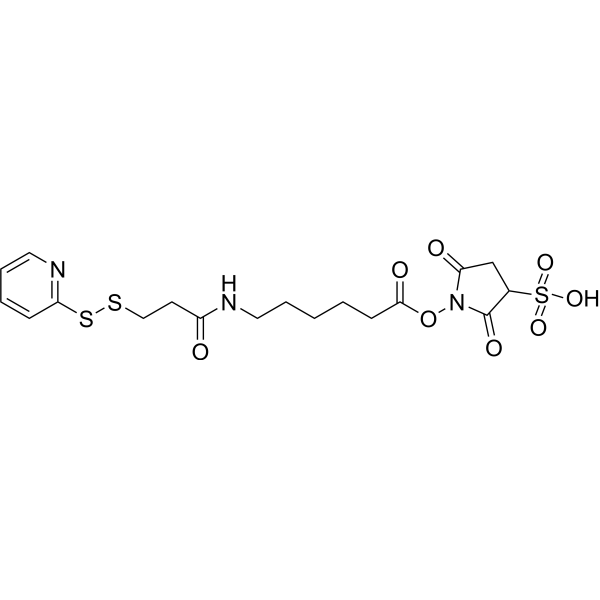 0 ImagesCat. No.: HY-126495CAS No.: 150244-18-1Sulfo-LC-SPDP is a heterobifunctional, thiol-cleavable and membrane impermeable crosslinker.
-
DBCO-PEG24-acid
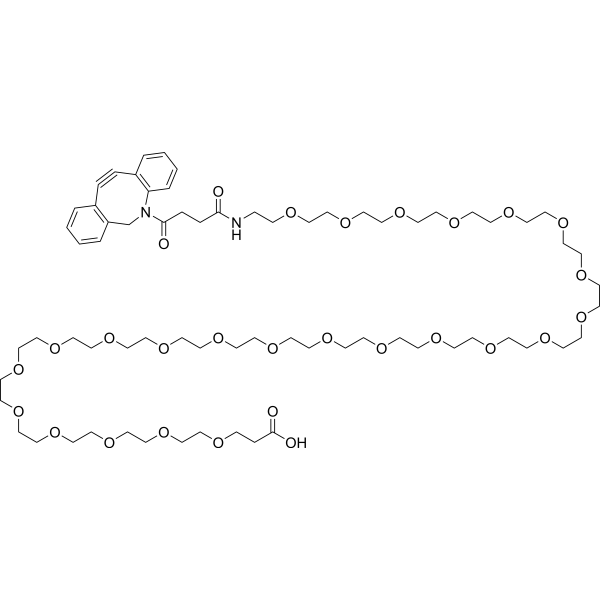 0 ImagesCat. No.: HY-151820CAS No.: 2765066-36-0DBCO-PEG24-acid is a click chemistry reagent. DBCO-PEG24-acid is an analog of DBCO-Acid with PEG linker and a DBCO group. The DBCO groups is commonly used for copper-free Click Chemistry reactions due to its strain promoted high energy. The hydrophilic PEG chain allows for increased water solubility. The terminal carboxylic acid can react with primary amine groups in the presence of activators (e.g. EDC, or HATU) to form a stable amide bond. Reagent grade, for research use only.
-
(2R,4R)-4-Hydroxypyrrolidine-2-carboxylic acid hydrochloride
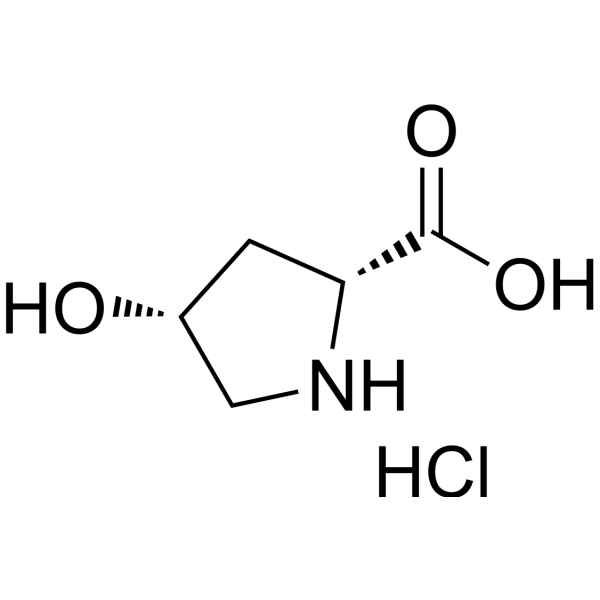 0 Imagescis-4-Hydroxy-D-proline hydrochloride is a non-cleavable ADC linker used in the synthesis of antibody-drug conjugates (ADCs). cis-4-Hydroxy-D-proline hydrochloride is also a alkyl chain-based PROTAC linker that can be used in the synthesis of PROTACs.
-
FMOC-3-azido-D-alanine
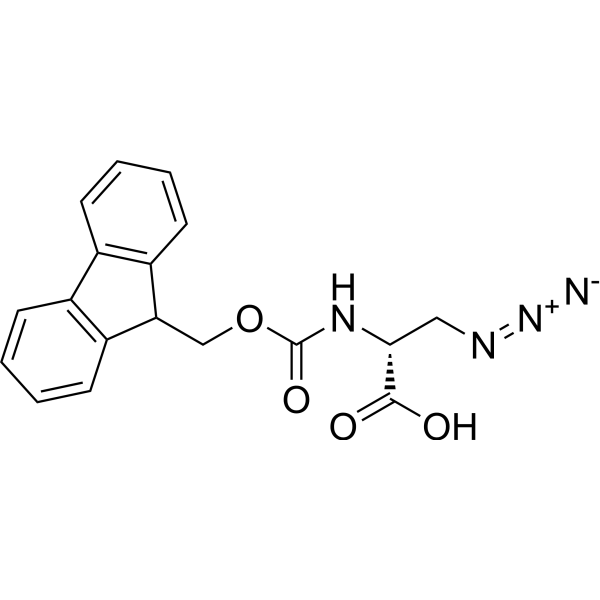 0 ImagesCat. No.: HY-151638CAS No.: 1016163-79-3FMOC-3-azido-D-alanine is a click chemistry reagent containing an azide group. It contains an azide group and can undergo copper-catalyzed azide-alkyne cycloaddition (CuAAc) with molecules containing alkyne groups. It can also undergo ring strain-promoted alkyne-azide cycloaddition (SPAAC) with molecules containing DBCO or BCN groups.
-
Mal-amido-(CH2COOH)2
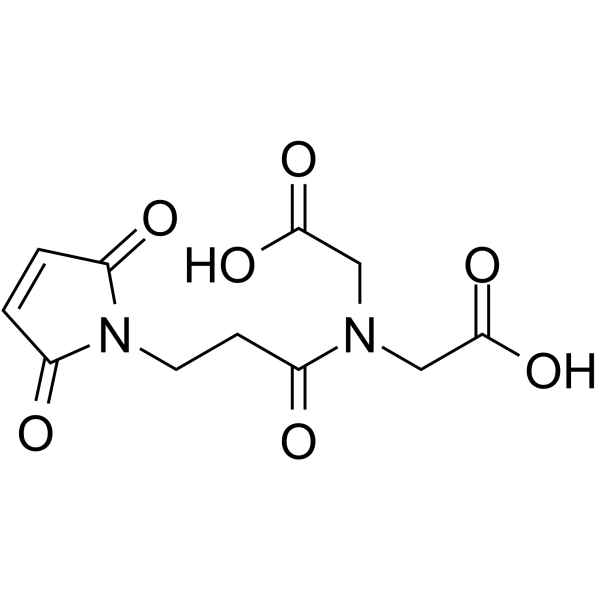 0 ImagesMal-amido-(CH2COOH)2, compound 7a, is a maleimidoethyl-containing intermediate for hydrophilic ADC linker.
-
Amino-Tri-(carboxyethoxymethyl)-methane hydrochloride
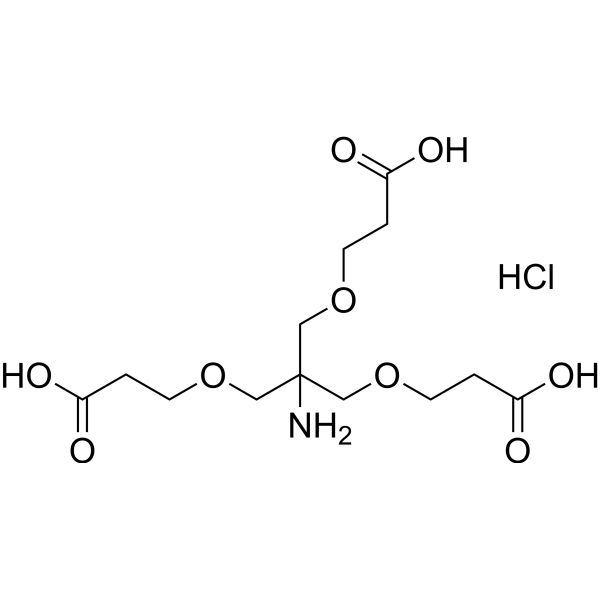 0 ImagesCat. No.: HY-117519ACAS No.: 1416771-72-6Amino-Tri-(carboxyethoxymethyl)-methane hydrochloride is a cleavable PEG ADC linker used in the synthesis of antibody-drug conjugates (ADCs). Amino-Tri-(carboxyethoxymethyl)-methan hydrochloride is also a PEG-based PROTAC linker that can be used in the synthesis of PROTACs.
-
DBCO-NHS ester 3
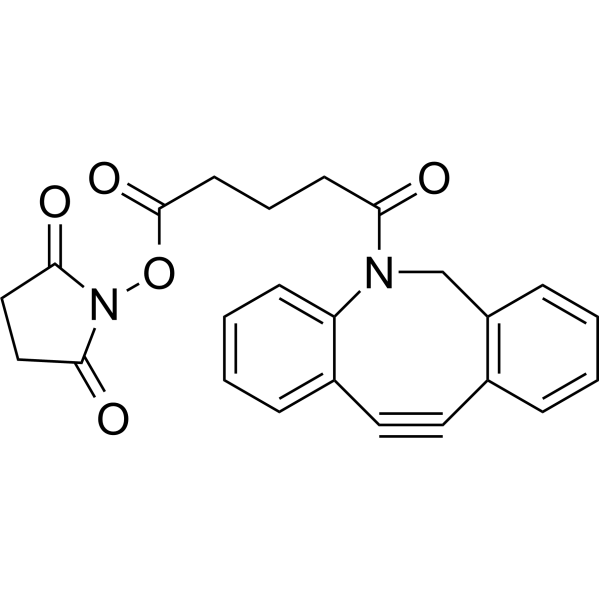 0 ImagesCat. No.: HY-115545CAS No.: 1393350-27-0DBCO-NHS ester 3 (Compound 12) is a cleavable linker that is used for making antibody-drug conjugate (ADC). DBCO-NHS ester 3 is a derivative of Dibenzylcyclooctyne (DBCO) obtained by activation of N-hydroxysuccinimide by the carboxylic acid moiety of both methyl-oxanorbornadiene (MeOND) and dibenzoazacyclooctyne (DIBAC). DBCO-NHS ester 3 is a click chemistry reagent, it contains a DBCO group that can undergo strain-promoted alkyne-azide cycloaddition (SPAAC) with molecules containing Azide groups.
-
FL118-C3-O-C-amide-C-NH2-d5
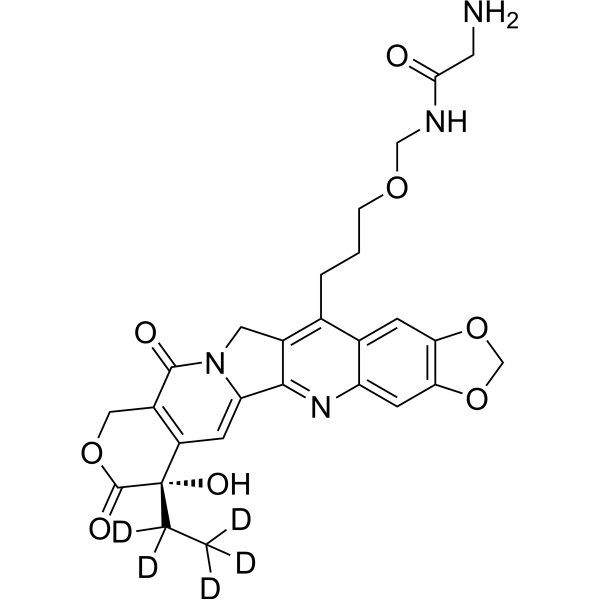 0 ImagesCat. No.: HY-161022SFL118-C3-O-C-amide-C-NH2-d5 is a deuterium labeled FL118-C3-O-C-amide-C-NH2.
-
H-D-Tyr(Propargyl)-OH
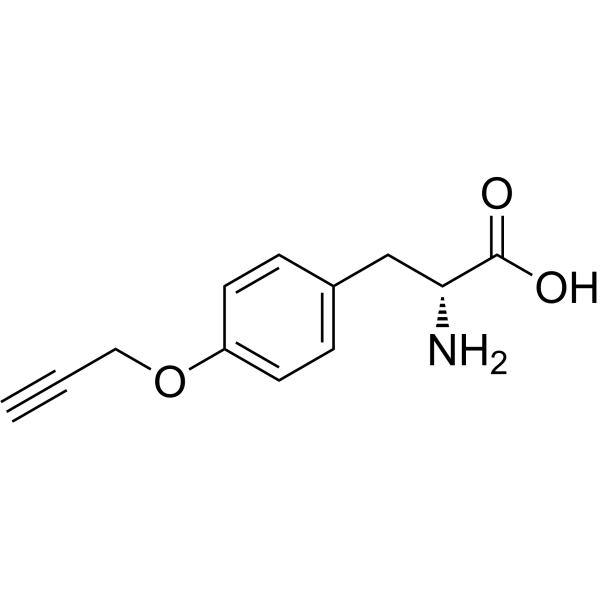 0 ImagesCat. No.: HY-151653CAS No.: 1170674-20-0Synonyms: O-Propargyl-D-tyrosineH-D-Tyr(Propargyl)-OH is a click chemistry reagent containing an Azide. H-D-Tyr(Propargyl)-OH is a click chemistry reagent, it contains an Alkyne group and can undergo copper-catalyzed azide-alkyne cycloaddition (CuAAc) with molecules containing Azide groups.
-
SCO-PEG3-NH2
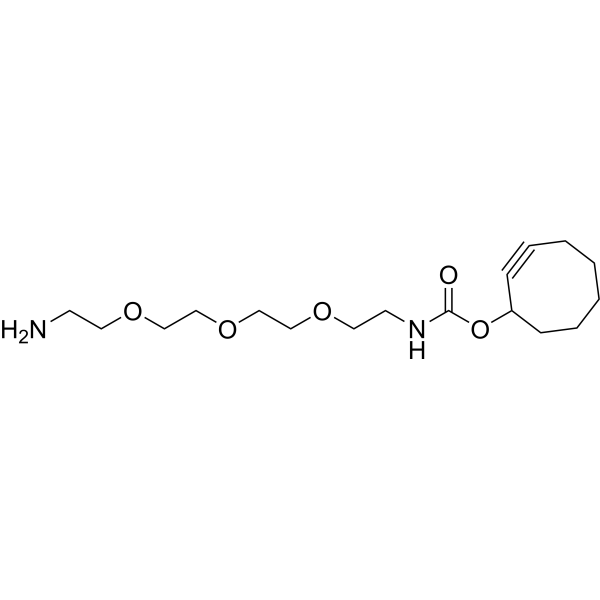 0 ImagesCat. No.: HY-156316CAS No.: 2141976-29-4SCO-PEG3-NH2 is a cleavable ADC Linker containing 3 PEG units. SCO-PEG3-NH2 can be used as a copper-free click chemical reagent for catalyst-free click reactions.
-
H-L-Lys(N3-Gly)-OH hydrochloride
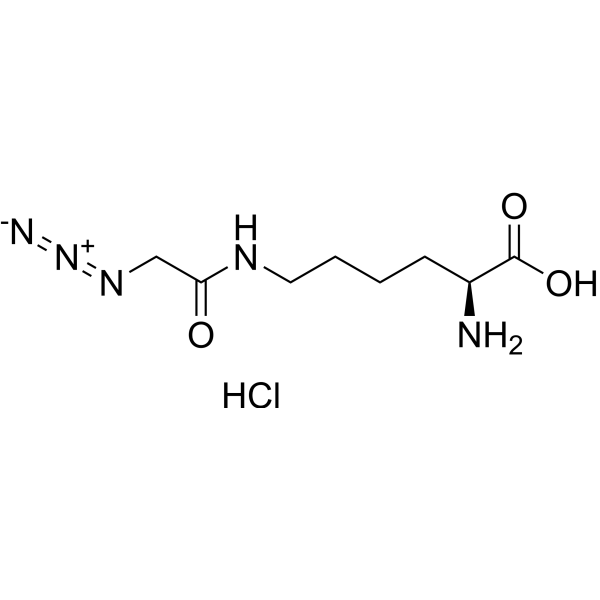 0 ImagesCat. No.: HY-151658AH-L-Lys(N3-Gly)-OH hydrochloride is a click chemistry containing an azide group, a lysine derivative. H-L-Lys(N3-Gly)-OH hydrochloride can be incorporated into proteins for click modifications. It contains an azide group and can undergo copper-catalyzed azide-alkyne cycloaddition (CuAAc) with molecules containing alkyne groups. It can also undergo ring strain-promoted alkyne-azide cycloaddition (SPAAC) with molecules containing DBCO or BCN groups.
-
Mal-PEG8-Val-Cit-PAB-PNP
 0 ImagesCat. No.: HY-W591339Mal-PEG8-Val-Cit-PAB-PNP is a ADC linker. Mal-VC-PAB-PNP can be used in the synthesis of antibody-drug conjugates (ADCs).
-
MC-Gly-Gly-{D-Phe}-Gly-NH-CH2-O-CH2COOH
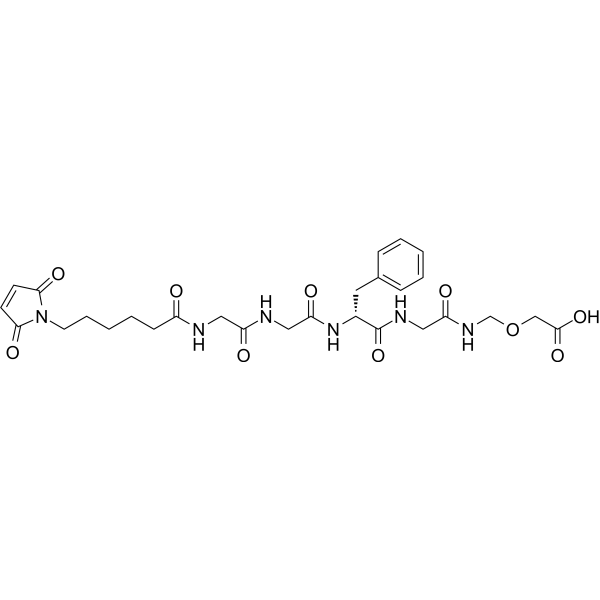 0 ImagesCat. No.: HY-131990ACAS No.: 1802520-40-6MC-Gly-Gly-{D-Phe}-Gly-NH-CH2-O-CH2COOH is a cleavable ADC linker used in the synthesis of antibody-drug conjugates (ADCs).
-
Hydroxy-PEG10-Boc
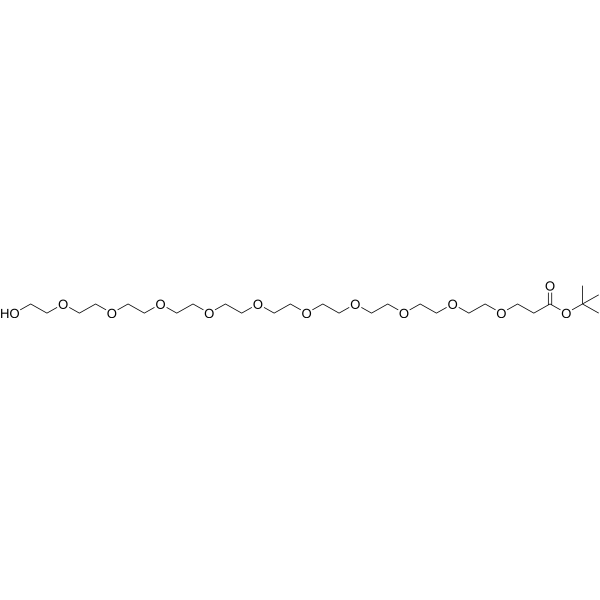 0 ImagesCat. No.: HY-W019939CAS No.: 778596-26-2Hydroxy-PEG10-Boc is extacted from patent CN108707228 (example 0024). Hydroxy-PEG10-Boc is a uncleavable ADC linker used in the synthesis of antibody-drug conjugates (ADCs). Hydroxy-PEG10-Boc can be conjugated to Paclitaxel (HY-B0015) or docetaxel (HY-B0011).
-
cis-4-Hydroxy-L-proline hydrochloride
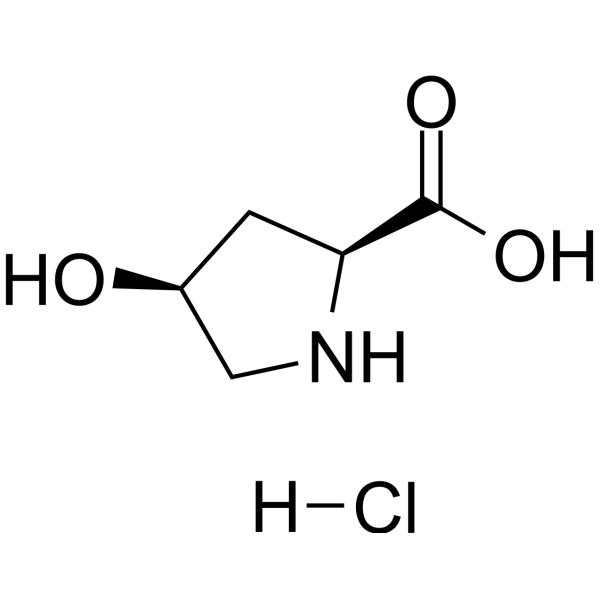 0 ImagesCat. No.: HY-W019213CAS No.: 441067-49-8cis-4-Hydroxy-L-proline hydrochloride is a cleavable ADC linker used in the synthesis of antibody-drug conjugates (ADCs). cis-4-Hydroxy-L-proline hydrochloride is also a PEG-based PROTAC linker that can be used in the synthesis of PROTACs.



